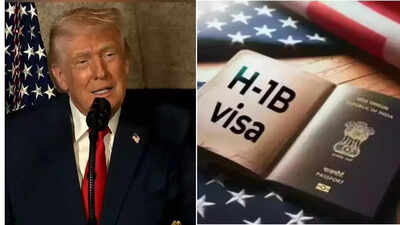
A US federal judge upheld the Trump administration’s move to move forward with President Donald Trump’s proposal to impose a $100,000 fee on new H-1B visas, a setback for American technology companies and business groups that questioned the move.U.S. District Judge Beryl Howell on Tuesday in Washington, D.C., dismissed a lawsuit filed by the Chamber of Commerce arguing that the high fee violates federal immigration law and would force companies, hospitals and other employers to cut jobs and services.Howell ruled that Trump had the legal authority to impose the fee, noting that his proclamation was issued “based on an express statutory delegation of authority to the President.” “The vigorous debate among the parties over the ultimate wisdom of this policy ruling is beyond the jurisdiction of the courts,” Howell wrote, Reuters reported.“As long as the measures dictated by the political decision and set out in the proclamation fit within the limits of the law, the proclamation must be upheld,” she added.The Chamber of Commerce had argued that the president lacked the authority to impose such a fee and warned that it would harm employers who rely on skilled foreign workers.Its executive vice president and chief counsel, Daryl Joseffer, said many small and medium-sized businesses are struggling to cover the costs. “We are disappointed with the court’s decision and are considering additional legal options to ensure that the H-1B visa program can function as Congress intended,” Joseffer said in a statement.
How much is the $100,000 H-1B fee?
The H-1B visa program allows U.S. employers to hire foreign workers in specialized fields and is often used by technology companies. The program issues 65,000 visas annually, plus 20,000 visas for workers with advanced degrees, typically valid for three to six years.Previously, H-1B visa fees generally ranged from $2,000 to $5,000, depending on various factors. Trump’s order would dramatically increase that cost to $100,000 for new applications.The chamber argued that the new fee would force companies to choose between significantly higher labor costs or hiring fewer highly skilled foreign workers. A group of Democratic-led states and a coalition of employers, nonprofits and religious organizations have also filed separate lawsuits challenging the fee.In his order, Trump cited his authority under federal immigration law to restrict the entry of foreign nationals deemed harmful to U.S. interests. Judge Howell said the government had sufficiently substantiated its claim that the H-1B program was displacing U.S. workers, citing cases in which companies laid off thousands of Americans while still seeking H-1B visas.