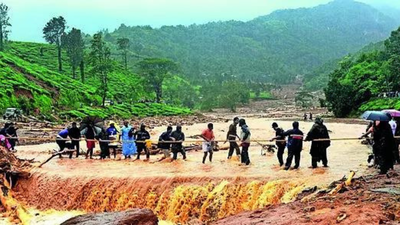
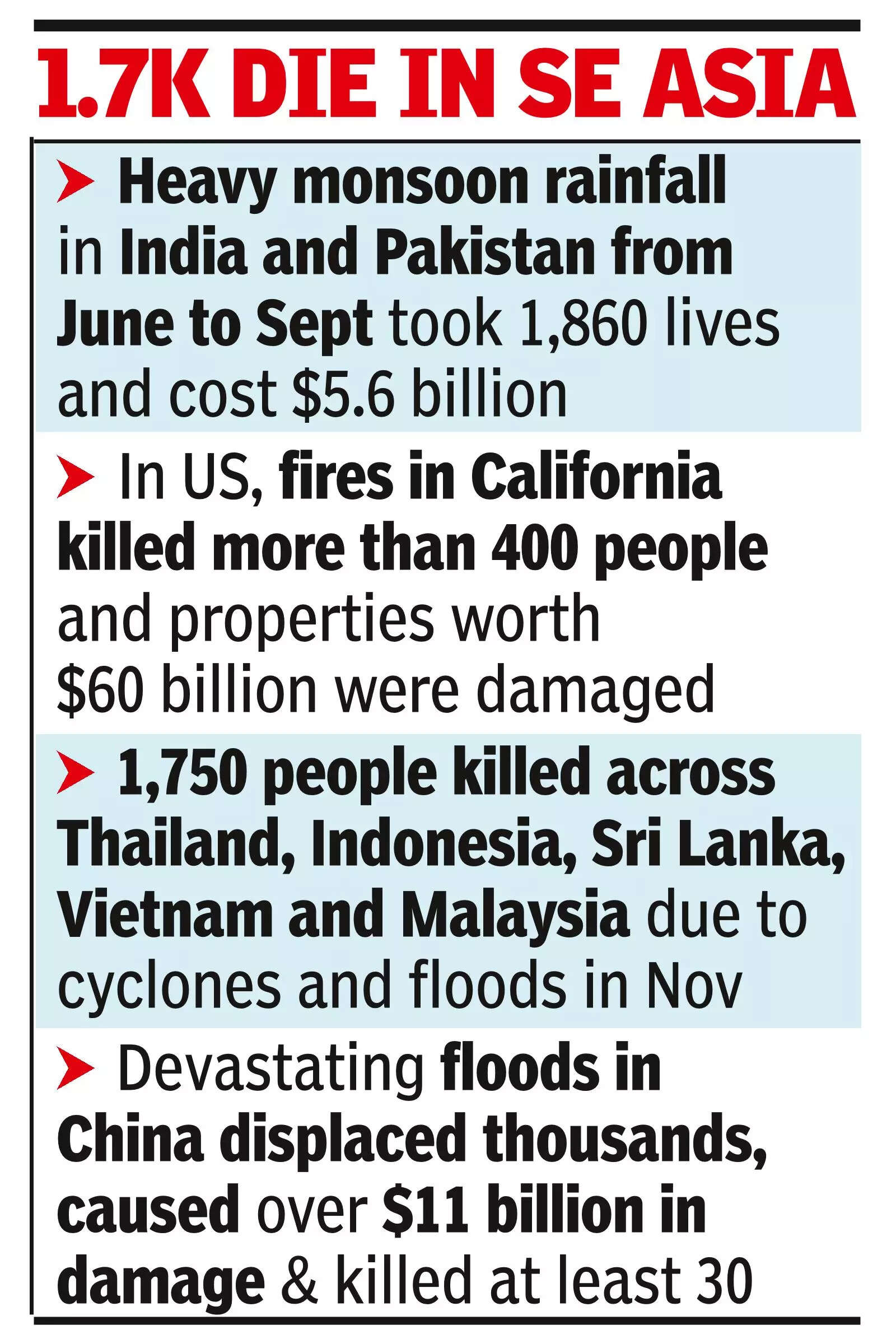
NEW DELHI: The top 10 extreme weather events such as wildfires, heatwaves, floods and cyclones will cost the world more than $122 billion in 2025, says a report – Counting the Cost 2025 – published by global non-profit organization Christian Aid. Exceptionally heavy monsoon rains in large parts of India and Pakistan from June to September are among the ten costliest and most consequential climate disasters of the year.The extreme rains in India and Pakistan combined claimed at least 1,860 lives and cost a total of $5.6 billion. Although the region ranks fifth in the list of ten in terms of financial losses suffered, it reported the highest number of victims.Globally, the United States – the largest historical CO2 emitter – bore the brunt, with the California fires being the largest single event, with $60 billion in damage (nearly 50% of the global total) and the deaths of more than 400 people.
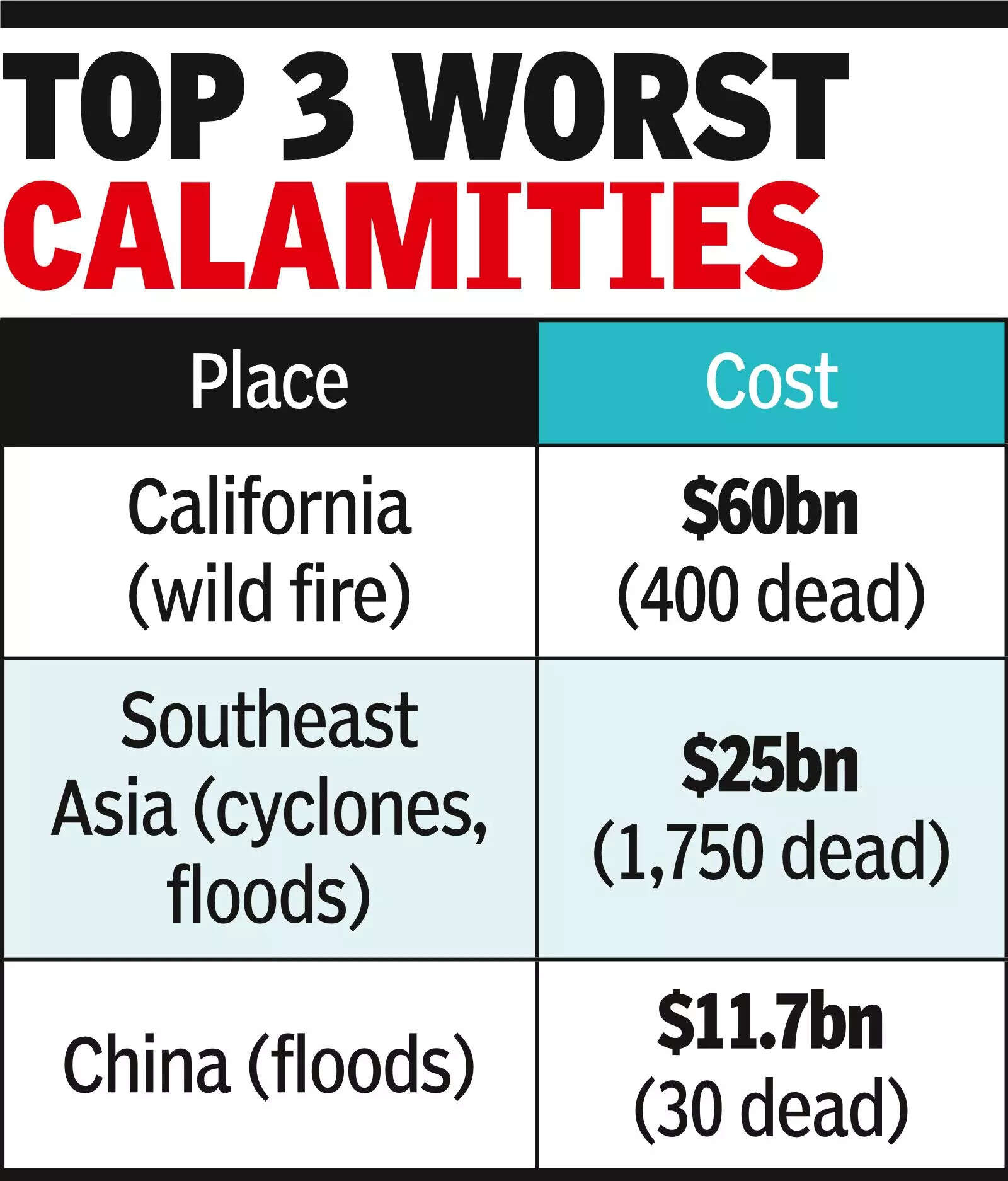
Christian Aid’s annual report, published on Saturday, highlighted that most of these estimates are based only on “insured losses”, meaning the true financial costs are likely to be even higher, while the human costs are often not taken into account.Second only to the United States were the hurricanes and floods that hit Southeast Asia in November, causing $25 billion in damage and killing more than 1,750 people in Thailand, Indonesia, Sri Lanka, Vietnam and Malaysia. Third, there were the devastating floods in China, which displaced thousands of people, caused $11.7 billion in damages, and killed at least 30 people.
“These disasters are not ‘natural’ – they are the inevitable result of continued fossil fuel expansion and policy delays. While costs run into billions, the greatest burden falls on communities with the fewest resources to recover. Unless governments act now to cut emissions and fund adaptation measures, this misery will only continue,” said Joanna Haigh, Emeritus Professor of Atmospheric Physics at Imperial College London.Although the top 10 focuses on financial costs, which are typically higher in richer countries because they have higher property values and can afford insurance, some of the most devastating extreme weather events this year hit poorer countries that did little to create the climate crisis and have the fewest resources to respond.“The suffering caused by the climate crisis is a political choice. It is driven by the decision to continue burning fossil fuels, allowing emissions to rise and breaking climate finance promises,” Christian Aid CEO Patrick Watt said, calling on world leaders to act in 2026.