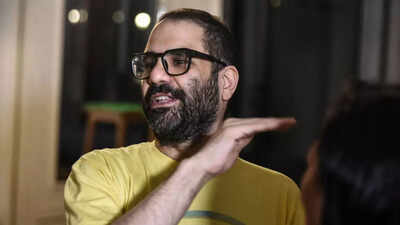
For years, Alaa Abd el-Fattah was one of the West’s best-known symbols of the idealism of the Arab Spring, which was crushed by authoritarian rule. As a blogger imprisoned for dissent, a hunger-striking political prisoner and a cause embraced by foreign ministers and human rights groups, his name became emblematic of Egypt’s long democratic winter.This story should end with freedom. Instead, his return to Britain has sparked a new controversy that has less to do with Cairo prisons and more to do with London politics, citizenship rules and the uncomfortable afterlife of digital speech.
Who is Alaa Abd el-Fattah?
Abd el-Fattah is an Egyptian software developer and political activist who rose to prominence in the mid-2000s as part of Egypt’s early blogging community. Long before social media became a political tool, he used online platforms to criticize police brutality, military trials of civilians and the authoritarian nature of the Egyptian state.During the 2011 uprising that toppled Hosni Mubarak, Abd el-Fattah became one of the revolution’s most prominent civilian voices. But the years after the revolution were unforgiving. Under successive governments, and particularly after Abdel Fattah el-Sisi came to power, he was repeatedly arrested, charged under protest and cybercrime laws, and sentenced to long prison sentences.At the end of the 2010s, Abd el-Fattah was internationally considered one of Egypt’s most prominent political prisoners.
Why was his imprisonment such a global problem?
Abd el-Fattah’s imprisonment became a rallying point for international human rights advocacy. Amnesty International, UN officials and Western governments cited his case as evidence of Egypt’s shrinking civic space.His hunger strikes from prison, including one that coincided with the COP27 climate summit hosted by Egypt, attracted international attention. His case gained particular urgency for British politicians after he gained British citizenship in 2021 through his British-born mother.From that point on, his detention was no longer just a human rights matter, but also a consular matter.
How did the UK get involved?
Successive British governments raised the case of Abd el-Fattah with the Egyptian authorities. His family, led by his sisters Mona Seif and Sanaa Seif, mounted a sustained campaign in London, staging protests outside Downing Street and the Foreign Office.Senior British politicians publicly supported the campaign while in opposition, and ministers vowed to seek his release once he was in office. At the end of 2025, after years of diplomatic pressure, Abd el-Fattah was released and allowed to travel to Britain.What was expected to be a moment of closure instead became the beginning of a new political storm.
What sparked the controversy after his return?
Shortly after Abd el-Fattah’s arrival in the UK, old social media posts and interviews from the late 2000s and early 2010s resurfaced. Some contained inflammatory language about violence, Israel and political opponents, written at a time of intense regional conflict and repression.Critics argued that such material should have been identified during citizenship verification. Supporters countered that the comments were more than a decade old, came in a completely different political context and did not reflect his later public positions.The focus quickly shifted from Egypt’s human rights abuses to Britain’s own administrative systems and political judgment.
Why is citizenship now at the center of the debate?
Under British law, the government can revoke citizenship in certain circumstances, provided the person does not become stateless and strict legal thresholds are met. Abd el-Fattah has dual British-Egyptian nationality, which has brought his status under scrutiny.The government has admitted failures in due diligence during the naturalization process and launched an internal review. The opposition has taken up the issue, questioning whether political sympathy for Abd el-Fattah’s cause has led to corners being cut.The debate is no longer just about one individual, but about how Britain balances humanitarian engagement with national security controls.
What did Abd el-Fattah say?
Abd el-Fattah has apologized for some of his previous online statements. He described them as comments from a younger man affected by anger, war and oppression, and acknowledged that he had not thought about how they would affect others.His family maintains that he has consistently spoken out against violence and that attempts to change his mind amount to a political campaign to discredit him and those who supported his release.
Why is this important beyond an individual case?
The Abd el-Fattah episode reveals a recurring dilemma for liberal democracies. Political dissidents hailed as symbols of freedom are rarely straightforward figures. Many come from an environment characterized by violence, radicalization and moral absolutism.For years, Western governments viewed Abd el-Fattah as a moral certainty: a prisoner of conscience facing an authoritarian state. His return to Britain has forced a reckoning with a harder truth: that solidarity does not erase history and that citizenship brings with it both scrutiny and compassion.This tension between ideals and institutions is why his story continues to dominate headlines long after the prison gates have opened.