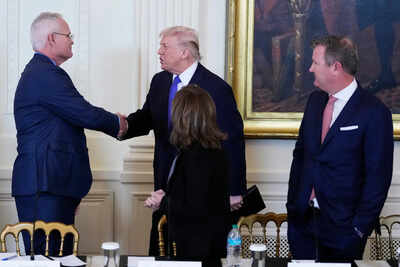
As US President Donald Trump While the White House met senior oil executives to push for investment in Venezuela, the message was deliberately ambitious. Venezuela has the world’s largest proven oil reserves. Trump argued that the political landscape had changed. With American support and security guarantees, the country should once again become an important destination for US energy capital.The oil industry’s reaction was extremely muted.Executives did not dispute Venezuela’s resource potential. Instead, they pointed to a combination of legal uncertainty, economic risk and hard-earned experience that continues to make major investments unattractive, even with the president’s support.
A country rich in oil but poor in production
Venezuela’s oil numbers are remarkable. The country has an estimated 303 billion barrels of proven reserves, about 17% of the world’s total, more than any other country. By the late 1990s, the company was producing over 3 million barrels per day, making it one of the world’s leading exporters.Today, production has fallen to under 1 million barrels per day. Years of mismanagement, underinvestment, sanctions and infrastructure decay have undermined a once-sophisticated oil industry in developing countries.This collapse is the central reason for the oil companies’ skepticism. Restoring production to a meaningful level is not a matter of restarting wells. This would require the reconstruction of pipelines, modernization facilities, refineries, electricity supply and a skilled workforce, all of which require long-term capital commitments.
Trump’s argument: security, speed and scope
At the meeting, Trump urged companies to think big. He spoke of investments of up to $100 billion, promised “total security” for American companies and suggested that the deals could be completed quickly. The broader geopolitical framework was also clear: US companies should act decisively to prevent China or Russia from expanding their presence in Venezuela.From the government’s perspective, Venezuela’s oil represents both an economic and strategic opportunity. For companies in the space, however, it was not about opportunity but about risk.
ExxonMobil draws a clear boundary
The most direct assessment came from ExxonMobil. Its chief executive described Venezuela’s current investment environment as “uninvestable.” The comment reflected Exxon’s long institutional memory. The company has been operating in Venezuela since the 1940s and has seen its assets expropriated twice, most recently during the wave of nationalizations under Hugo Chávez.For Exxon, whose projects often cost tens of billions of dollars and span 20 to 30 years, the lack of permanent legal protection is crucial. The company hinted that it could send a technical team to assess the condition of the assets, but fell far short of providing capital.The distinction is important. Technical assessments are reversible. Large upstream investments are not the case.
Chevron’s Limited Optimism
While Exxon articulated the industry’s red lines, Chevron illustrated what cautious engagement looks like. Chevron already operates in Venezuela through joint ventures and special licenses. The meeting said production at existing operations could increase by up to 50% in the next 18 to 24 months.While this number is significant, it must be considered in context. Venezuelan production of Chevron remains only a fraction of the country’s historical output. The forecast increase reflects incremental improvements to existing assets rather than the launch of new, capital-intensive projects.Chevron’s stance suggested that limited gains are possible where infrastructure and personnel are already in place, but that this does not justify a rapid expansion of commitment.
Conditional interest of others
Other companies adopted a similar tone.Shell said it has billions of dollars in potential opportunities in Venezuela, but only if sanctions relief and regulatory clarity are maintained over time. Without this certainty, the projects remain hypothetical. Oilfield services companies such as SLB expressed confidence that they can increase their activities. Their optimism reflects a different risk profile. Service providers provide equipment and expertise and can scale operations more easily than producers, who must invest capital in fields and infrastructure. Meanwhile, Continental Resources founder Harold Hamm, a close Trump ally, called Venezuela’s reserves a “real gem” but rejected investment. The assessment reflected the mood in the room: admiration without obligation.
Economics and risk still dominate
Politics aside, the economy remains a challenge. Much of Venezuela’s crude oil is heavy or extra-heavy, making it more expensive to extract and refine. Restoring production requires reliable access to diluents, functioning upgraders and robust export logistics. Industry estimates suggest that revitalizing Venezuela’s oil sector on a large scale would require tens of billions of dollars in upfront investments, with returns spread over decades. At a time when oil companies have access to lower-cost, lower-risk projects elsewhere, particularly in parts of South America and offshore developments, Venezuela is struggling to compete on risk-adjusted returns.
What the meeting revealed
The White House meeting did not produce the comprehensive commitments Trump had hoped for. Instead, the industry’s position was clarified. Oil companies do not question Venezuela’s resource base. They question whether the legal, regulatory and policy environment is stable enough to support long-term investments. Exxon wants structural reforms before capital. Chevron will optimize what it already operates. Shell wants permanent clarity about the sanctions. Service companies are ready to get involved, but operators remain cautious.
The end result
Venezuela’s huge oil reserves are beyond doubt. It remains uncertain whether the conditions needed to attract large, long-term investments can be created and maintained. Unless oil companies are confident that contracts will be enforced, policies will remain predictable, and political changes will not reverse trade agreements, interest will likely remain low and capital deployment limited. The meeting underscored that for Big Oil, enthusiasm follows stability, not the other way around.