
NEW DELHI: Our fight against toxic air in cities is clearly reflected in medical bills. Sales of respiratory medicines, including anti-allergic drugs and anti-asthma therapies, rose to over 1,950 billion in December 2025. Sales in December were 10% higher than the corresponding month in 2024 and over 18% higher than in 2023, figures from market research firm Pharmarack showed, suggesting a steady increase each year. In the Oct.-Dec. quarter, the period when pollution typically peaks, sales rose at the same time, up 14% year over year in 2024 and 8% in 2023. During the quarter, respiratory therapy sales crossed Rs 5,620 crore, up 17% quarter-on-quarter. A major portion of this therapy – nearly Rs 3,500 crore – was raised through medicines for asthma and COPD (chronic obstructive pulmonary disease).
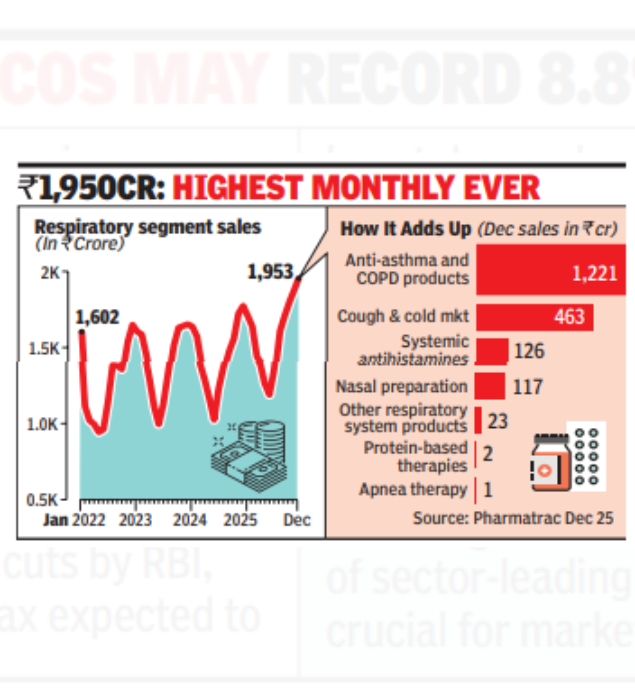
In addition, Foracort, the drug for asthma and respiratory diseases, is one of the best-selling drugs in the winter months, reflecting this trend. In December, it was the second largest drug after weight loss therapy Mounjaro with sales of Rs 90 crore. Overall, the domestic pharmaceutical market is estimated at Rs 2.4 million per annum. Air pollution can worsen asthma and respiratory infections and even lead to serious problems such as chronic obstructive pulmonary disease, medical experts say. “With the increase in suspended particles in the air, the number of patients with allergic rhinitis and bronchitis in daily outpatient settings is increasing by around 60%. The use of masks and air purifiers is particularly helpful for susceptible people.” As far as treatment is concerned, use of steroid inhalers as well as anti-allergic drugs forms the backbone,” Amitabh Malik, head of ENT department at Paras Health in Gurgaon, told TOI. Other therapies commonly used during these months include Augmentin (marketed by GSK Pharma) and Paracetamol (pain and fever treatment). A GSK Pharma India executive said: “The October-February period typically coincides with a seasonal surge in upper respiratory tract infections.” This leads to increased demand for corresponding medications in these months. Poor air quality is said to be a factor, particularly in the increase in allergic rhinitis and respiratory problems such as coughs and colds.” Significantly, the trend is visible across all zones – with North and South being similar in terms of sales, the data says. “Several regions reported double-digit growth compared to the previous month, suggesting that winter-related ailments are no longer a seasonal variation, but air pollution in the winter months is making it an escalating public health trigger,” Pharmarack noted in its November update.