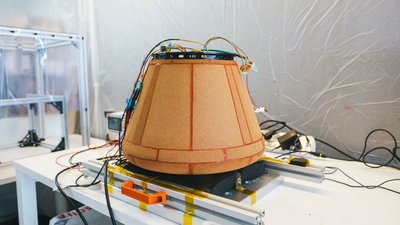
NEW DELHI: As the third phase failed on Monday, Isro’s PSLV-C62 launch vehicle lost 15 satellites from multiple countries and Indian companies, including the primary payload. However, a football-sized Spanish satellite called KID (Kestrel Initial Demonstrator) survived, although it only sent “critical data” back to Earth for about three minutes.The 25 kg satellite separated from the PSLV fourth stage “against all odds,” despite the third stage anomaly that led to mission failure. The satellite’s developer, Orbital Paradigm, said onKID, designed for reentry testing at a water splash in the South Pacific, had to withstand peak deceleration forces and thermal stresses that would destroy most experimental devices. “We are reconstructing the trajectory. We have survived the highest heat and maximum G-load (~28g recorded). We have internal temperatures. Full report will follow,” the company said.Developed with French partner RIDE, KID validates Orbital Paradigm’s reusable re-entry technology, critical for future maintenance and de-orbit satellites. The startup plans to release a detailed report soon and will likely accelerate Kestrel’s comprehensive development program.Tragedy struck for PSLV when an “anomaly” in the third stage forced the rocket off its trajectory and prevented the insertion of its payload into sun-synchronous orbit.Isro Chairman V. Narayanan said on Monday, “Towards the end of the third phase, we detected glitches in the vehicle and there was a deviation in its flight path. As a result, the mission could not proceed as expected.” According to him, all 16 satellites, including the primary payload EOS-N1 (Anvesha), a hyperspectral earth imaging satellite developed by DRDO for national security and surveillance, were believed to be lost.It turned out that KID was the only one who survived long enough to transmit signals. Orbital Paradigm has yet to confirm whether the capsule later burned out or landed on Earth.