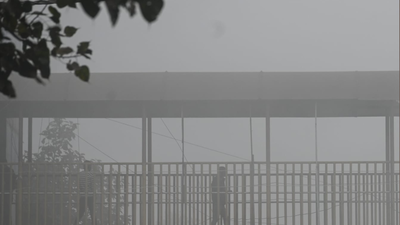
NEW DELHI: With Delhi-NCR regularly choked by heavy pollution during winters, the Supreme Court on Monday said a key reason behind the ineffectiveness of a slew of orders and protocols to combat harmful air was the reluctance of the rich and affluent to change their lifestyle. The remark was made by a bench of CJI Surya Kant and Justices Joymalya Bagchi and Vipul M Pancholi after amicus curiae and senior advocate Aparajita Singh complained to the court that air pollution continues to hover at very high levels and is causing severe health problems to residents of Delhi-NCR despite several SC orders putting in place protocols to combat pollution. Singh said, “The implementation of these orders and taking action as per protocols has always remained delayed.” The bench headed by the CJI said, “The Supreme Court has issued a number of orders but the situation remains unchanged. What is the solution? We have to issue practical orders which can be implemented. Otherwise people will continue to ignore it.” The CJI said, “People need to understand the need of the hour and change their lifestyle. The wealthy class is not adhering to the restrictions and continues to use large diesel-guzzling cars, generators and other polluting equipment. Pollution caused by vehicles is choking the national capital and surrounding areas. It is the poor and working class who are most exposed to pollution and suffer the most.” In an affidavit last week, the Air Quality Management Commission (CAQM) had told the court that the transport sector was responsible for 41% of air pollution in Delhi-NCR, while dust and construction activities accounted for 21%, industry 19%, power plants 5%, residential activities 3% and other sources 11%. It said that while these factors are constant sources of pollution, stubble burning is only a periodic cause limited to a short period of the year. When the CJI-led bench on Wednesday agreed to go into the issue of air pollution, the amicus complained that while the SC has banned schools and organizations from conducting sports events for children who suffer most from hazardous air quality, the organizers continue to circumvent the restrictions and conduct such events, endangering the welfare of students/children.Another lawyer, in a separate application, raised the issue of the health of school children in the presence of severe pollution. The court stated that the court’s time should not be spent listening to the arguments of different lawyers on the same issue and invited all lawyers to submit their suggestions to the amicus curiae, who would be the only one before the court to file opinions on different issues.