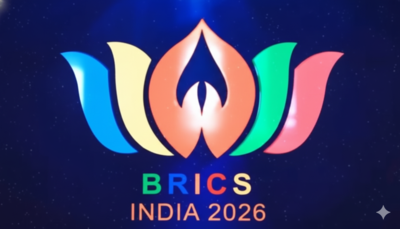
NEW DELHI: India on Tuesday formally launched the logo and official website for its 2026 Brics presidency, setting the tone for its upcoming chairmanship of the multilateral grouping. The inauguration took place in New Delhi, where External Affairs Minister S. Jaishankar attended the event and outlined India’s priorities for the coming year.The logo reflects the Indian identity and the collective character of the BRICS countries. Its overall shape is inspired by the lotus flower, India’s national flower. At the center of the design, the inner petals form two hands joined in a Namaste gesture, a gesture commonly associated with greeting and respect. The five petals are colored to represent BRICS founding members Brazil, Russia, India, China and South Africa, highlighting unity between different nations.Referring to the logo and website, External Affairs Minister S. Jaishankar said at the event that the theme underlines the need to strengthen capacity, promote innovation and ensure sustainable development for the benefit of all. He said the logo reflects the unity and diversity among Brics members while the Brics India website would serve as a common platform during India’s Chairmanship, provide information about meetings, initiatives and outcomes and enable timely dissemination of information and greater engagement.The foreign minister said India’s chairmanship of the Brics countries will aim to “harness the potential of the Brics countries for greater global prosperity”. He said India would take over the chairmanship in 2026 at “an important juncture in the grouping’s journey” as the Brics countries complete 20 years since their formation. Over the years, he said, the Brics region has “continuously developed into a significant platform for cooperation between emerging and developing countries,” expanding its agenda and membership while remaining focused on people-centered development, dialogue and practical cooperation.Outlining the roadmap for India’s chairmanship, Jaishankar said the four big priorities are “resilience, innovation, collaboration and sustainability”. He said these priorities would “provide a coherent and balanced framework for the three fundamental pillars of the Brics states: politics and security, economy and finance, and culture and people-to-people exchanges.”