
When US President Donald Trump floated the idea that Washington should receive millions of barrels of oil from Venezuela, it sounded like a throwback to an older energy playbook: pump more oil, lower fuel prices, make voters happy. The reality is far more chaotic.
What is proposed?
The plan under discussion calls for the United States to receive 30 to 50 million barrels of Venezuelan crude oil as well as American investments to help revive Venezuela’s oil production. This oil would then be sold on world markets, increasing supply and theoretically keeping prices low.The timing is important. Oil prices are already under pressure around the world and gasoline prices have fallen after years of inflation-related pain. The game against Venezuela is being sold as a way to secure that relief.
Why Venezuela still matters
Venezuela has the largest proven oil reserves in the world. On paper, it should be an energy superpower. In practice, years of mismanagement, sanctions and infrastructure collapse have hollowed out the industry.State oil company PDVSA is struggling to maintain wells, pipelines and refineries. Skilled workers have fled. The equipment is outdated. Even modest increases in production require time, money and political stability, all of which are in short supply.
Does more Venezuelan oil mean cheaper fuel?
Not automatically. Oil prices are set globally and not bilaterally. Even tens of millions of barrels spread over months is small in a market that consumes about 100 million barrels per day worldwide. Venezuelan oil would increase supply at the margins and not overwhelm the system.Prices are already low, largely due to global oversupply and cautious demand, including OPEC production decisions. Venezuelan barrels could help keep prices low, but they are unlikely to be the main driver.
The domestic costs for the USA
Cheap gas is a good policy, but it comes with trade-offs.Lower oil prices are weighing on U.S. shale oil producers, many of which are operating near breakeven. Continued weakness poses the risk of layoffs, stalled drilling and reduced investment in oil-intensive regions such as Texas and North Dakota.Unlike in the past, the United States is now a major oil producer and exporter. This means that falling prices no longer bring clear economic profit. Gains for consumers are increasingly offsetting losses in the energy sector.
Can Venezuela actually deliver?
That is the biggest uncertainty. Venezuela has repeatedly overpromised and failed to meet its production targets. Power shortages, crumbling infrastructure, regulatory uncertainty and political risks remain structural obstacles. Any agreement is also vulnerable to sanctions enforcement, legal challenges and changes in U.S. or Venezuelan policy.
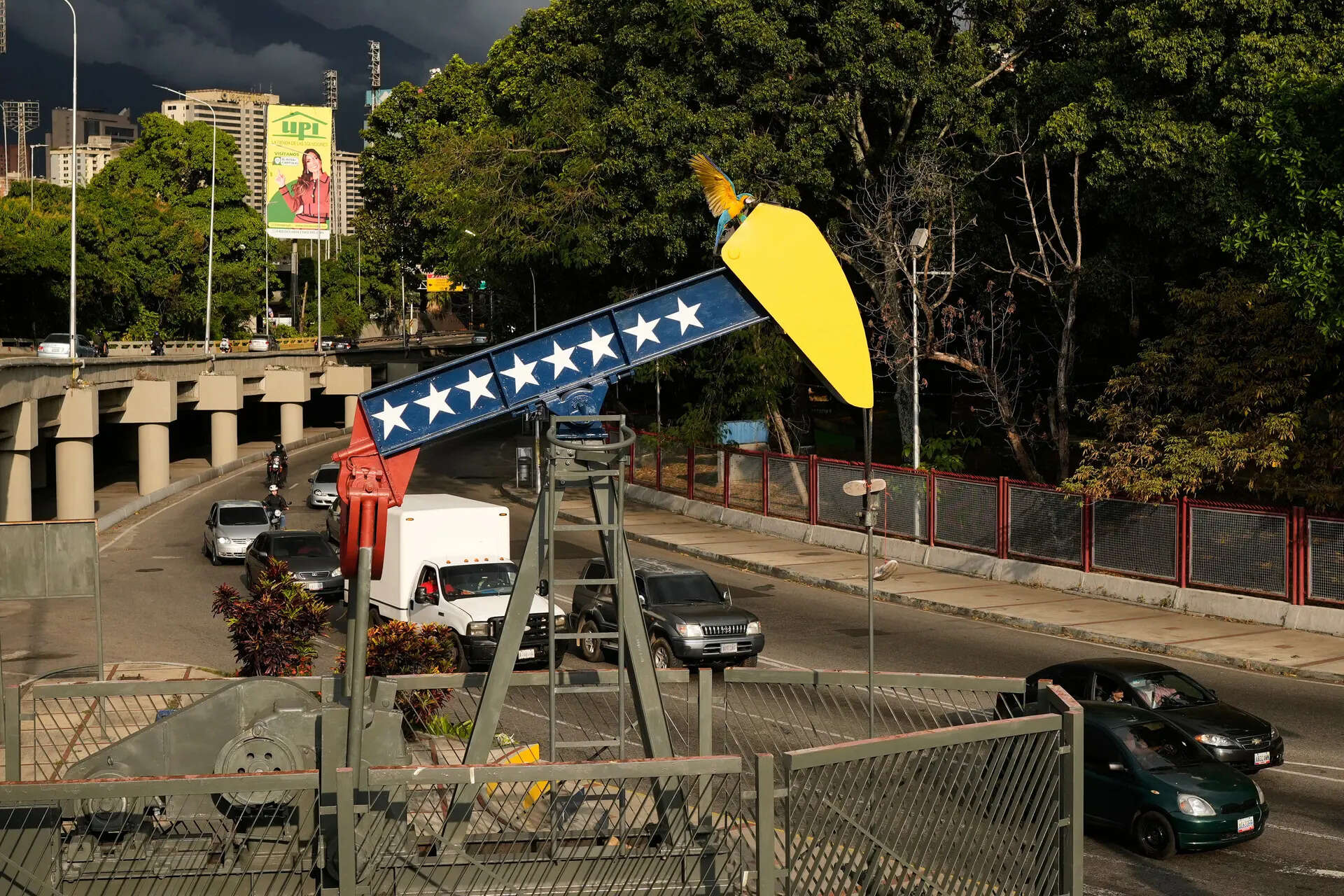
A macaw stands on a decorative oil drilling machine in Caracas, Venezuela, Tuesday, January 6, 2026. (AP Photo/Matias Delacroix)
Even with new investment, Venezuela cannot quickly increase production at a scale that will transform global markets.
The takeaway food
Venezuela may help keep oil markets loose at the edges, but it is not a magic lever for cheap gas. Fuel prices are low today because of global dynamics, not because Caracas has returned to energy heavyweight status.The relief for consumers is likely to continue. The pressure on US oil producers is growing. And for Venezuela, the promise of an oil-based revival remains far more desirable than assured.