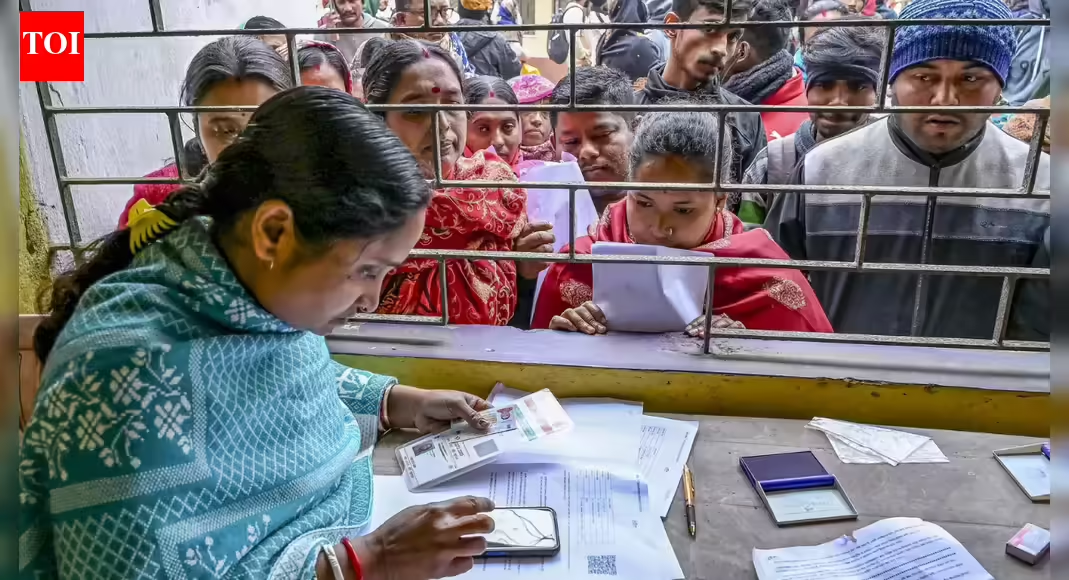
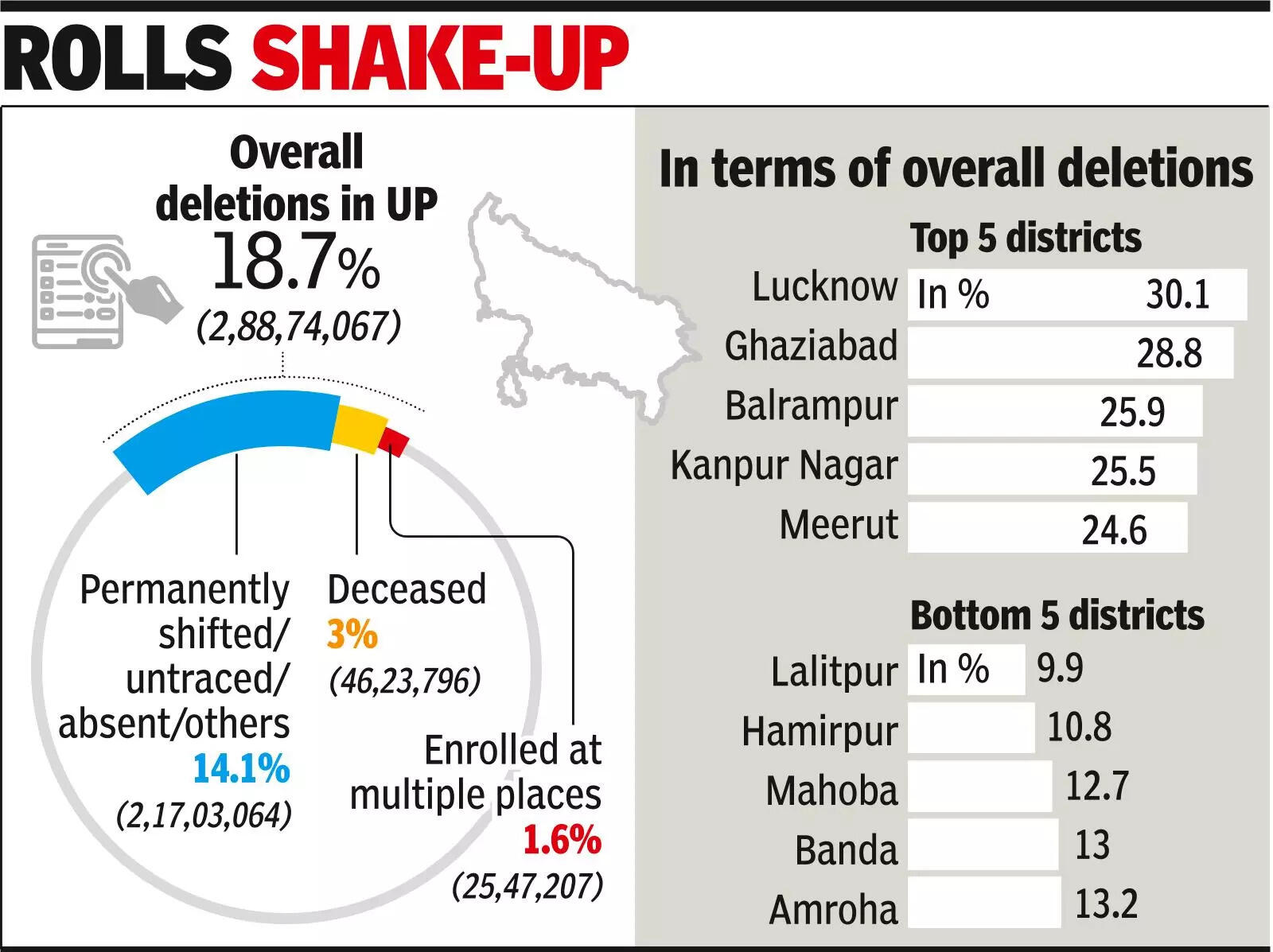
Another 25.5 lakh, comprising over 1.6% of the electorate, were registered at two places. A total of 79.5 lakh (5.1%) voters could not be traced while 46.2 lakh (nearly 3%) were dead. More than 7.7 lakh (0.5%) voters did not return the completed voter forms.Lucknow reported the highest percentage of deletion at 30%, followed by Ghaziabad (28.8%), Balrampur (26%) and Kanpur Nagar (25.5%). Lalitpur recorded the lowest deletions at 9.9%, closely followed by Hamirpur (10.8%) and Mahoba (12.4%).“Over 1 crore (8%) of 12.5 crore voters either could not trace their ancestry in the electoral rolls or their names were not in the 2003 SIR list. These voters have been placed in the unassigned category and will receive notices within the next 31 days. “These voters are required to submit one of the 12 documents listed in the notice,” said Returning Officer Rinwa.
Over 1Cr voters were placed in the Unassigned category.
During the counting phase, over 15.7 lakh people submitted Form 6, meant for registering new voters. These names, if valid, will form part of the final roles.In Lucknow, around 5.3 lakh of the 12 lakh names dropped from the convocation lists were of voters who had opted to move to their hometowns, while 4.2 lakh could not be traced.An official said the high rate of “permanently switching voters” – at 8.4%, almost double Bihar’s 4.6% – was no surprise. He cited a 2021 Down to Earth survey that estimated the migration rate for UP at about 28.4%, double Bihar’s 14.2%.The original December 4 deadline to complete the count was extended twice – first to December 11 and then to December 26 – after it was discovered that a large number of voters were excluded from the electoral rolls.“The release date of the electoral lists was set for December 31 but parallel field work and instructions from the ECI to rationalize polling stations resulted in a delay,” Rinwa said. Authorities will process claims and appeals until February 27.