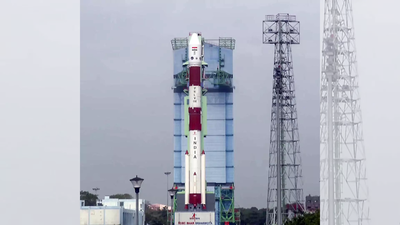
BENGALURU: Orbital Paradigm, the company whose re-entry capsule Kestrel Initial Technology Demonstrator or KID was among the payloads of the failed PSLV-C62 mission, said on Tuesday that it has started analyzing data sent by the capsule after separation from the launch vehicle.“Our KID capsule, against all odds, separated from the PSLV-C62, powered up and transmitted data for more than three minutes. We are reconstructing [the] trajectory. We endured the highest heat and highest G-load (~28g recorded)…Full report to follow,” the company said.Isrowould also have started analyzing the data it had received up to the point when the third stage (PS3) of the launch vehicle suffered a failure. Besides KID and India’s own DRDO strategic satellite Anvesha or EOS-N1, the mission carried a satellite (Munal) for Nepal by the Ministry of External Affairs (MEA), a technology demonstrator (AyulSat) from startup OrbitAID that aims to crack in-orbit refueling, and 12 other payloads.On Monday, the 44.4-meter PSLV, completing its fifth mission in the DL (dual strap-on) configuration, lifted off from SDSC’s first launch pad at 10:18 a.m., about 1:30 minutes behind schedule. Approximately 8.40 minutes later, after third stage shutdown and fourth stage (PS4) ignition were announced – the command was initiated, but there was no confirmation whether PS4 ignited – the atmosphere in mission control became tense. Narayanan eventually announced that the mission had failed. The failure came just nine months after a flaw in PSLV-C61’s PS3 prevented EOS-09, another strategic satellite, from reaching orbit on May 18, 2025, marking PSLV’s second consecutive failure. Not only has PSLV never had consecutive failures in the past, it also hasn’t experienced a failure of the same rocket stage more than once – until now.“…Shortly before the end of the third stage [PS3] We saw little major disruption in the vehicle’s roll rates and as a result there was a deviation in the trajectory. “We are analyzing the data and will come back as soon as possible,” Isro Chairman V Narayanan said on Monday.