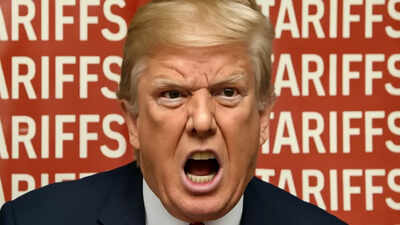
In a new round of global tariffs, US President Donald Trump has announced that countries trading with Iran will impose a 25% tariff on the world’s largest economy. The move is seen as a pressure tactic on Iran over its response to nationwide protests that have reportedly left nearly 600 people dead.Trump has repeatedly warned that his administration could consider military action if it finds the Iranian government using lethal force against protesters. Trump described this as a threshold that Iran is “starting to cross,” leading to discussions within his national security team about what he called “very strong options.”Trump announced the tariff decision in a social media post on Monday, saying the measures would take effect immediately. Several major economies, including China, Brazil, Turkey, Russia and India, have trade relations with Iran.“Effective immediately, any country doing business with the Islamic Republic of Iran will pay a 25% tariff on all business conducted with the United States of America. This order is final and conclusive. Thank you for your attention to this matter!” Trump posted on Truth Social.
How will 25% additional tariffs affect India?
India already faces 50% tariffs on its exports to the US. While 25% of this figure is “reciprocal tariffs”, the remaining 25% is punitive tariffs on India’s crude oil imports from Russia.India and Iran have important trade relations, with India consistently ranking among Iran’s top five trading partners in recent years, according to the Foreign Ministry. India’s major exports to Iran include a range of products including rice (especially basmati), tea, sugar, pharmaceutical goods, man-made staple fibers, electrical appliances and artificial jewelry. In return, India mainly imports items such as dry fruits, inorganic and organic chemicals, and glassware from Iran.Also read: “Conquer and hold the cities”; 5 takeaways from Reza Pahlavi’s statement amid Iran protests
Iran is reportedly a major market for Indian basmati rice, typically purchasing more than a million tonnes per year. Iran has traditionally been one of the largest foreign markets for Indian basmati rice. Iran reportedly buys nearly 12 lakh tonnes every year, with the trade value estimated at around Rs 12,000 crore.However, Iran is not among its top five trading partners in terms of both imports and exports. India’s top export destinations are currently the United States of America, the United Arab Emirates, the Netherlands, China and the United Kingdom – accounting for 41% of India’s exports, according to the Ministry of Commerce dashboard. From a trade and strategic perspective, India also has a significant stake in the Iranian port of Chabahar. Last year, the US extended the lifting of sanctions against the Iranian port of Chabahar for another six months until April this year. The waiver had already been withdrawn in September 2025, when the US State Department revoked the waiver first granted in 2018 that had allowed India to develop the port as a gateway to Afghanistan and Central Asia while avoiding routes through Pakistan as part of efforts to increase pressure on Tehran.If the exemption expires, companies involved in the operation of the port or related activities could face U.S. penalties under the Iran Freedom and Counter-Proliferation Act.Chabahar has become more strategically important to India’s mission in Afghanistan, especially as cooperation with the Taliban government in Kabul has gradually improved.