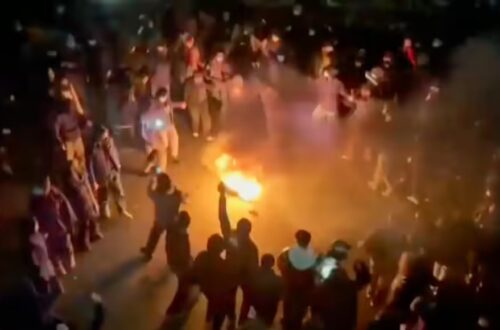

Maccabi Tel Aviv fans will not be allowed to attend their Europa League away game against Aston Villa at Villa Park on November 6 due to security concerns. This is following advice from West Midlands Police. The Safety Advisory Group (SAG) cited the threat of anti-Semitic attacks and the risk of protests around the stadium as the main reasons for the ban. The decision was criticized by political leaders, Jewish organizations and human rights groups, who stressed the need to ensure fan safety while maintaining access for international sports fans.
The big picture
European football is increasingly facing security challenges related to geopolitical conflicts. In recent years, games involving Israeli teams have come under increased scrutiny due to clashes between fans and protest groups at home and abroad. Uefa and local authorities have often had to balance fan access with public safety, highlighting the increasing politicization of sporting events.Antisemitism remains a persistent problem across Europe and the UK. High-profile threats, demonstrations and targeted attacks on Jewish communities have increased calls for proactive measures to ensure fan safety. Football stadiums, often viewed as public spaces, are now subject to heightened security protocols that are influenced by social and political tensions that extend far beyond the game itself.The decision to ban Maccabi supporters reflects broader security priorities of the British authorities. Officials have cited both immediate threats and intelligence about planned protests, showing that domestic law enforcement and sports governance are increasingly intersecting with international issues.The ban also raises questions about access and fairness for international fans. Maccabi Tel Aviv is the only Israeli club currently competing in European club tournaments, making this restriction both symbolic and practical. On October 16, Aston Villa confirmed that the Safety Advisory Group (SAG) had instructed the club to ban away fans from attending the Europa League match against Maccabi Tel Aviv. West Midlands Police supported the move, citing findings of threats and previous violent incidents, including clashes during Maccabi’s 2024 game against Ajax in Amsterdam.Political leaders and community organizations immediately condemned the decision. The Jewish Leadership Council called the ban “perverse” and called on authorities to ensure supporters can attend safely. Shadow sports minister Louie French criticized the move as an expression of anti-Semitism and sectarian hatred and called on the government to explore options to allow Maccabi Tel Aviv fans to attend the game. British Prime Minister Keir Starmer stressed that anti-Semitism would not be tolerated and stressed that public safety remained a priority for the authorities.Advocacy groups, including Game Over Israel and the Hind Rajab Foundation, reportedly influenced authorities by highlighting potential security risks. Aston Villa stressed that the safety of both away fans and local residents was the central concern in implementing the ban.
Why it matters
The ban has several effects. Firstly, it highlights anti-Semitism in Europe and the UK and shows how targeted threats can disrupt international sporting events. Second, it highlights the vulnerability of public spaces to politically motivated violence and forces authorities to make preemptive security decisions that impact ordinary fans. Third, it has diplomatic resonance: restrictions on Israeli fans can influence bilateral perceptions and fuel debates about fairness and inclusivity in international sports governance.Beyond politics, the ban affects the economics of sports. International supporters contribute to ticket sales, tourism and the local economy. Restricting the number of spectators has financial consequences for clubs, municipalities and UEFA and raises questions about balancing commercial interests and security requirements.Finally, it highlights the complexity of modern sports governance, where local police, national government and continental organizations such as UEFA must coordinate under uncertain and sometimes volatile conditions.
Historical context
Maccabi Tel Aviv fans have experienced hostility in previous European Cup matches. In particular, violent clashes with Ajax supporters in Amsterdam in 2024 resulted in prison sentences for several people. Police escorted Maccabi fans during Europa League games in Greece amid protests against Israel’s crackdown in Gaza.Similar restrictions have also been imposed on other clubs in Europe. Fans of Ajax Amsterdam and Eintracht Frankfurt were banned from traveling to games in Italy and France for safety reasons, showing that pre-emptive bans are not unprecedented.Threats against Israeli supporters in the UK, including a sermon in Birmingham aimed at Maccabi fans, have tightened authorities’ risk assessments. These historical incidents help justify the current decision and reflect a pattern of risk reduction in politically sensitive games.
What’s next?
The British government is reportedly considering ways to lift the ban while maintaining security, a complex process given ongoing security concerns. UEFA and Aston Villa are in discussions with authorities to determine whether limited spectator numbers or increased security measures could allow fans to visit safely.Observers will be watching closely to see how authorities balance fan safety with international norms. The situation could set a precedent for how politically sensitive games are handled across Europe and influence policies on anti-Semitism, public safety and sports diplomacy.International football fans, advocacy groups and political leaders will be monitoring developments ahead of the match on November 6, as the resolution could signal how the UK addresses security threats at major sporting events while maintaining access for fans from around the world.